Melasma Care That
Goes Beyond the Surface
Melasma is a chronic pigmentary condition that causes darker patches of skin, most often on the face. It can be influenced by hormones, ultraviolet and visible light, genetics, and other individual factors. At Skin Harmony MD, care combines evidence-based dermatology with comprehensive photoprotection, thoughtful skincare, attention to hormonal influences and individual triggers, and lifestyle factors when relevant.
Book a Discovery Call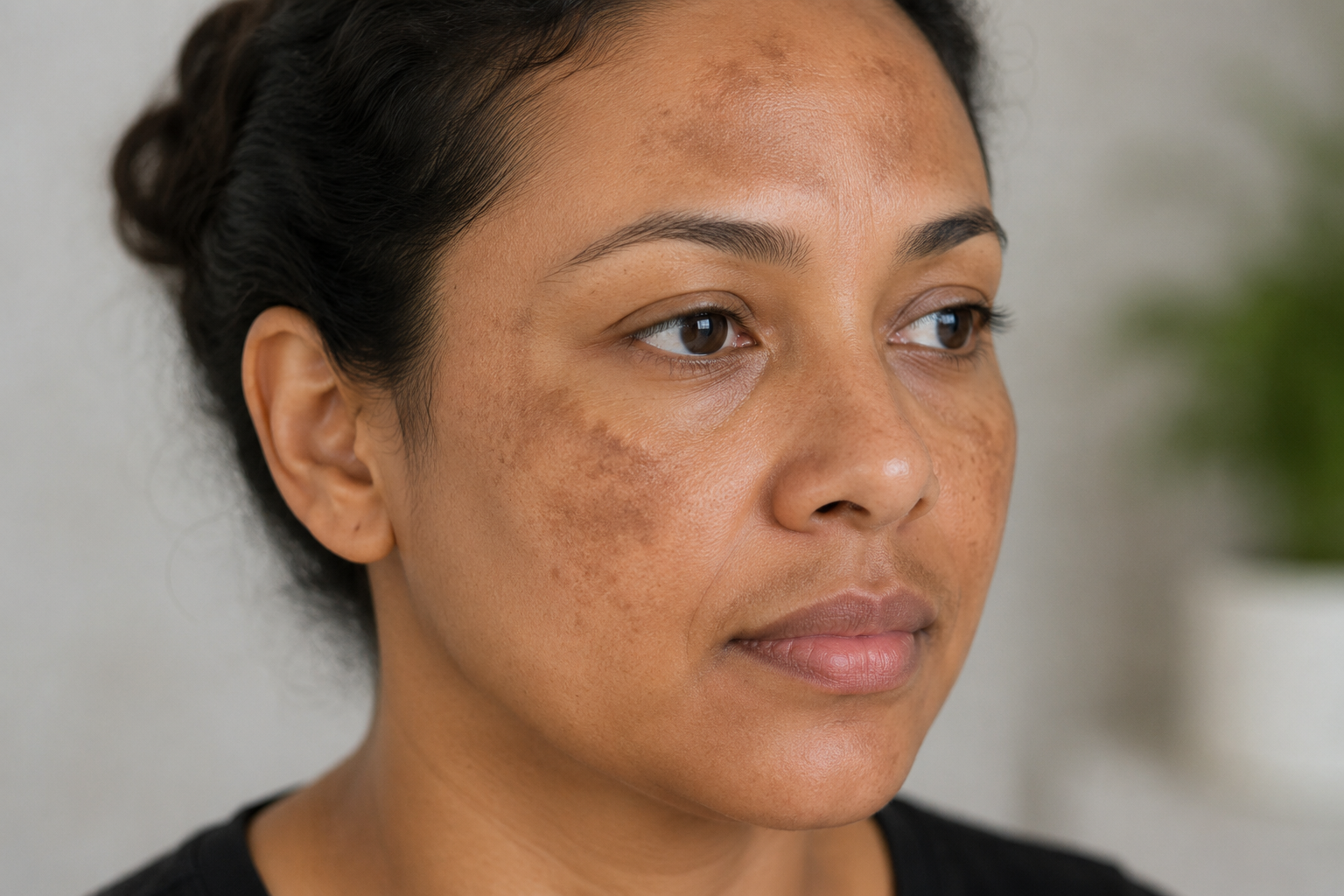
You May Be Looking for a Different Kind
of Melasma Care If…
- You're frustrated that your melasma keeps returning after treatment.
- You want to better understand how hormones, sun and visible light, skincare, and other individual factors may affect your pigmentation.
- You want evidence-based treatment along with a realistic long-term maintenance plan.
- You'd like more time with a dermatologist to understand your treatment options.
- You want a personalized approach rather than a one-size-fits-all plan.
Melasma Is a Pigmentary
Condition Influenced by Many Factors
Melasma causes patches of darker skin, most often on the face, that can be challenging to treat and quick to return. It develops when pigment-producing cells in the skin become more active in response to a combination of light exposure, hormonal influences, genetics, and other factors within the skin. Understanding your own pattern is an important part of both treatment and long-term control.
What Is Melasma?
Melasma is a chronic pigmentary condition in which pigment-producing cells become more active, creating areas of darker skin. Research also suggests that melasma involves changes in the surrounding skin environment, including inflammation, sun-related skin changes, and communication between different types of skin cells. It most commonly appears on the cheeks, forehead, upper lip, nose, and chin and is especially common in women and people with medium to darker skin tones.
Even after successful treatment, pigmentation can return when triggers such as sunlight, visible light, hormonal changes, or skin irritation remain present.
What Can Influence Melasma?
Melasma develops through a complex interaction between light exposure, hormonal influences, genetics, inflammation, and changes within the skin.
- UV and visible light. Both ultraviolet radiation and visible light from sunlight can stimulate pigmentation and worsen melasma. Tinted sunscreens containing iron oxides can provide additional protection from visible light.
- Hormonal influences. Pregnancy, oral contraceptives, and hormone replacement therapy can trigger or worsen melasma in some patients.
- Genetics. Melasma often runs in families, suggesting a genetic susceptibility.
- Skin irritation and inflammation. Irritating skincare products, inflammation, and overly aggressive procedures can worsen pigmentation, particularly in skin that is prone to discoloration.
- Heat. Some people notice that significant heat exposure seems to worsen their pigmentation. The role of heat in melasma is still being studied, so we consider this most when there is a clear individual pattern.
Researchers are continuing to study how other biological factors may influence melasma. Areas of interest include the gut microbiome, estrogen metabolism, oxidative stress, inflammation, and cellular aging within the skin. These findings may eventually help us better understand why melasma behaves differently from one person to another, but many of these connections are still emerging and are not yet established targets for routine melasma treatment.
No two patients have exactly the same pattern. Understanding your hormonal history, light exposure, skincare routine, previous treatments, and individual triggers helps us create a more personalized plan.
The Integrative Approach at Skin Harmony MD
Evidence-based melasma treatment and comprehensive photoprotection remain the foundation of care.
Our integrative approach adds time to understand hormonal influences, skincare, individual triggers, lifestyle factors, and emerging areas of research when they are relevant to your health and treatment goals.
What Comprehensive
Melasma Care Looks Like
A Thorough Evaluation of Your Full Picture
Medical Dermatology as the Foundation
Depending on your skin tone, sensitivity, treatment history, medical history, and goals, options may include prescription lightening agents, retinoids, azelaic acid, oral tranexamic acid for selected patients, and other evidence-based therapies.
Because oral tranexamic acid is used off-label for melasma and is not appropriate for everyone, we carefully review your medical history and risk factors before considering it.
Comprehensive Photoprotection
Because visible light can also worsen pigmentation, we often recommend a tinted sunscreen containing iron oxides in addition to strong UVA and UVB protection.
Hats, shade, and thoughtful sun-exposure habits can provide additional protection.
Adjunctive & Complementary Options
These are considered based on your medical history, treatment goals, and the strength of the available evidence.
Hormonal, Lifestyle, and Individual Factors
We also consider skincare irritation, heat when there is a clear individual pattern, and other factors that may be relevant to your pigmentation.
There is no specific diet proven to treat melasma. We encourage a balanced, nutrient-dense dietary pattern, adequate sleep, stress support, and other healthy lifestyle foundations as part of overall health.
Long-Term Maintenance
Once pigmentation improves, a maintenance plan focused on photoprotection, skincare, trigger awareness, and appropriate intermittent treatment can help preserve results over time.
What Shapes Melasma —
and How It Affects You
Hormonal Influences
Sun, Visible Light & Heat
Emotional Health & Quality of Life
Melasma,
Answered Honestly
Melasma can be a chronic condition, and recurrence is common.
Sunlight, visible light, hormonal influences, genetics, skin irritation, and other individual factors can remain present even after pigmentation improves. That is why long-term photoprotection and maintenance treatment matter.
Daily broad-spectrum sunscreen is essential.
Because visible light can contribute to pigmentation, tinted sunscreens containing iron oxides can be particularly helpful.
Yes.
Pregnancy, oral contraceptives, and hormone replacement therapy can trigger or worsen melasma in some patients.
This is an emerging area of research.
Researchers are studying possible connections between the gut microbiome, estrogen metabolism, inflammation, and melasma. At this point, these relationships are not fully understood, but they may eventually help us better understand why melasma behaves differently from one person to another.
Digestive symptoms or other clinical concerns can still be considered as part of the broader health picture.
Some people notice that significant heat exposure seems to worsen their pigmentation.
The role of heat in melasma is still being studied, so we consider it most when there is a clear individual pattern.
Certain antioxidant and photoprotective supplements, including Polypodium leucotomos, have been studied as adjuncts to melasma treatment.
The evidence is more limited than for established medical treatments and photoprotection, so supplements are considered based on your individual situation and treatment goals.
For selected patients, yes.
Oral tranexamic acid is used off-label for melasma and is not appropriate for everyone. We carefully review your medical history and risk factors before considering it.
We may consider selected complementary approaches when they are reasonably safe, have some supportive evidence, and fit your individual needs and goals.
These approaches may be incorporated alongside evidence-based melasma treatment and comprehensive photoprotection.
Yes. Skin Harmony MD is a dermatology practice.
Treatment may include prescription topical therapies, oral treatment for selected patients, and other evidence-based approaches.
No.
Some patients choose Skin Harmony MD as their primary dermatology practice, while others continue seeing another dermatologist for in-person treatments or procedures.
Yes. Skin Harmony MD provides virtual dermatology care for adults throughout Maryland, Virginia, and Washington, DC.
Visits are conducted via telehealth and are cash-pay.

Comprehensive Melasma Care, Built Around You
Virtual melasma care for adults throughout Maryland, Washington, DC, and Virginia — combining evidence-based dermatology with the time and attention to understand your pigmentation pattern, triggers, and long-term treatment needs.
Book a Discovery Call