Hidradenitis Suppurativa Care
That Goes Beyond the Surface
Hidradenitis suppurativa (HS) is a chronic inflammatory skin condition that can cause painful nodules, drainage, tunnels beneath the skin, and scarring. At Skin Harmony MD, care combines evidence-based medical dermatology with thoughtful attention to metabolic health, hormonal factors, nutrition, lifestyle, and other factors that may be relevant to your individual disease pattern.
Book a Discovery Call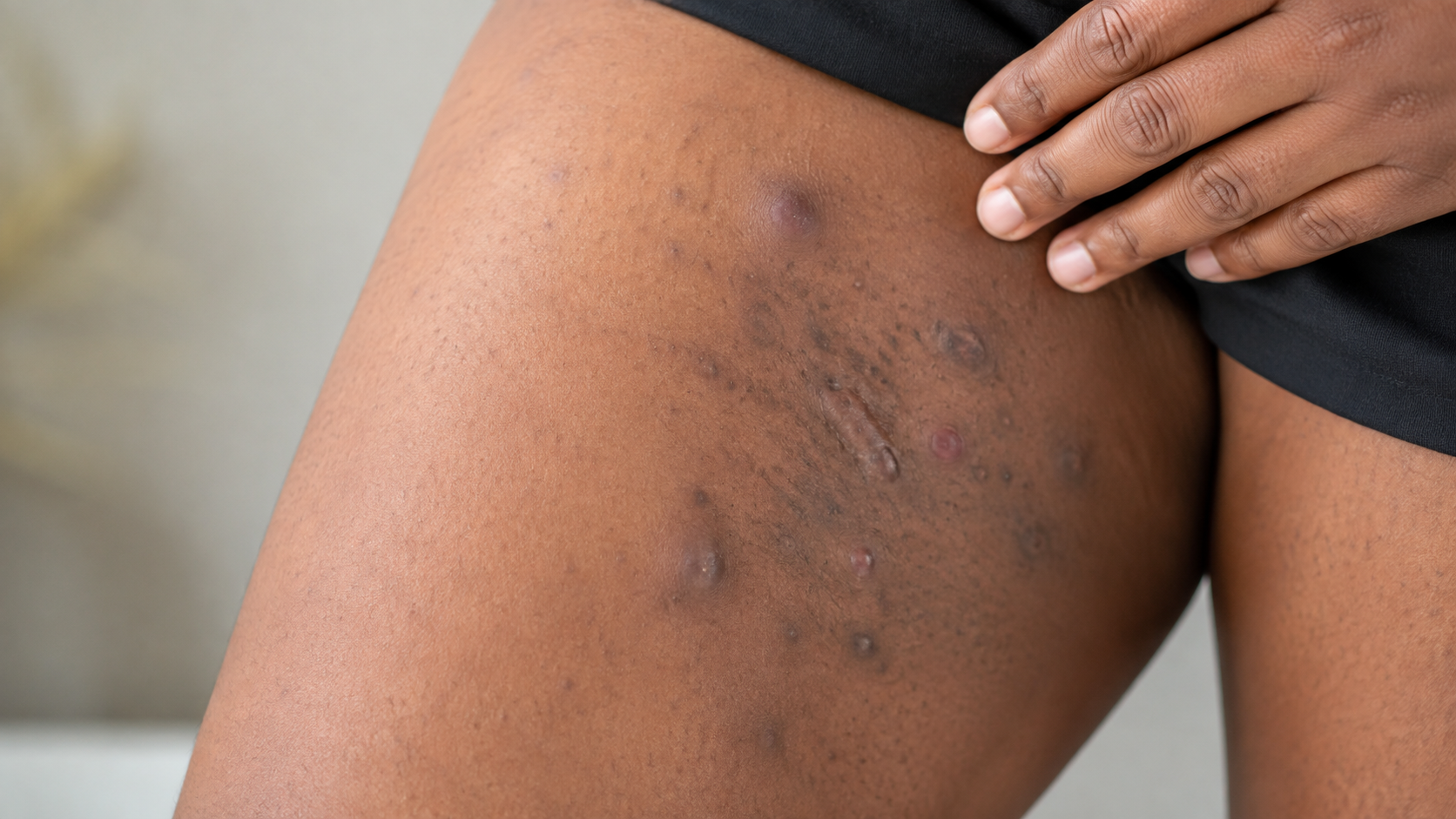
You May Be Looking for a Different Kind
of HS Care If…
- You want to better understand the factors that may be influencing your HS rather than simply treating each flare.
- You're curious about how metabolic health, hormones, nutrition, stress, lifestyle, and other aspects of your health may fit into the broader picture.
- You want evidence-based medical treatment while also considering your overall health.
- You'd like more time with a dermatologist to understand your disease and treatment options.
- You want a personalized plan rather than a one-size-fits-all approach.
- You want a doctor who leaves space for evidence-informed complementary approaches to be used alongside medical treatment.
HS Is a Chronic Inflammatory
Disease — Not an Infection
Hidradenitis suppurativa causes recurring painful nodules, abscesses, draining areas, tunnels beneath the skin, and scarring, most often in the underarms, groin, buttocks, and beneath the breasts. HS is not caused by poor hygiene and is not simply a bacterial infection. Inflammation involving the hair follicle plays a central role, and repeated inflammation can eventually lead to permanent tunnels and scarring.
What Is HS?
HS is a chronic inflammatory disease involving the hair follicle. It may begin with painful nodules or abscess-like lesions that can rupture, drain, recur, and eventually form tunnels beneath the skin.
HS is also associated with several health conditions beyond the skin, including metabolic conditions, PCOS, inflammatory bowel disease, and depression.
The pattern and severity vary widely. Some people experience occasional localized flares, while others develop persistent or more extensive disease.
What Can Influence HS?
HS develops through a combination of genetic, inflammatory, hormonal, metabolic, and environmental factors.
- Metabolic health. HS is associated with insulin resistance, diabetes, abnormal cholesterol levels, metabolic syndrome, and higher body weight. These connections may be relevant both to HS and to long-term overall health.
- Hormones. Some patients notice flares around the menstrual cycle, and HS occurs more commonly in people with PCOS. Hormonal or metabolic evaluation may be appropriate when the history suggests this pattern.
- Smoking. Smoking is strongly associated with HS. When relevant, smoking cessation can be an important part of supporting both skin and overall health.
- Friction, sweating, and body weight. Friction and sweating can aggravate affected areas. Higher body weight may also contribute through increased friction and is associated with metabolic changes that can be relevant in HS. When weight management is part of the conversation, we focus on sustainable strategies that support health without shame or unnecessary restriction.
- Genetics. HS can run in families, although family history alone does not determine whether someone will develop HS or how severe it will become.
- Nutrition. Diet does not cause HS, but nutrition can influence metabolic and overall health, and may affect disease activity in some people. We focus on a nutrient-dense, minimally processed eating pattern and individualize recommendations when specific metabolic or dietary concerns are present.
- Digestive health. Gut health may be relevant in some people with HS, particularly when significant digestive symptoms or inflammatory bowel disease are also present. In those situations, gastrointestinal evaluation or additional testing may be appropriate based on the individual clinical picture.
- Nutrient status. Vitamin D, zinc, and other nutritional factors have been studied in HS. When there is a clinical reason to suspect deficiency, testing and targeted supplementation may be considered.
- Stress and emotional health. Pain, drainage, unpredictable flares, and scarring can have a substantial impact on quality of life and emotional well-being.
Not every factor applies to every patient. Understanding your disease pattern and overall health helps us build a more individualized treatment plan.
The Integrative Approach at Skin Harmony MD
Evidence-based HS treatment remains the foundation of care. Our integrative approach adds time to understand metabolic and hormonal health, nutrition, stress, lifestyle, digestive health, and other factors that may be relevant to your disease and overall health.
What Comprehensive
HS Care Looks Like
A Thorough Evaluation of Your Full Picture
We also consider metabolic health, hormonal history when relevant, nutrition, smoking, stress, gastrointestinal symptoms, weight history when clinically relevant, and related health conditions.
Targeted Evaluation & Testing
When appropriate, evaluation may include blood sugar, cholesterol, or other measures of metabolic health. Hormonal evaluation may be considered when HS occurs alongside irregular periods, excess facial or body hair, acne, scalp hair thinning, or other features suggestive of PCOS.
Nutritional or gastrointestinal evaluation may also be considered when symptoms, history, or other clinical findings suggest it could be relevant.
Medical Dermatology as the Foundation
Because Skin Harmony MD is virtual, some treatments and procedures require referral to an in-person dermatologist or other specialist.
Metabolic & Hormonal Health
Care may include nutrition and lifestyle strategies, hormonal treatment when appropriate, and referral for additional medical care when needed.
Nutrition & Digestive Health
For patients with insulin resistance, PCOS, or other metabolic concerns, additional attention to blood-sugar regulation may be helpful.
When HS occurs alongside significant digestive symptoms or other gastrointestinal concerns, we may look more closely at digestive health and consider whether additional evaluation is appropriate.
Lifestyle Foundations
When weight management is relevant, the focus is on sustainable changes that support metabolic health and quality of life.
Skin, Friction & Daily Care
Evidence-Informed Complementary Approaches
HS Can Be Connected
to More Than the Skin
Metabolic Health
Hormonal Health & PCOS
Emotional Health & Quality of Life
Hidradenitis Suppurativa,
Answered Honestly
No. HS is an inflammatory disease involving the hair follicle.
Bacteria can sometimes be present in inflamed or draining areas, but HS itself is not caused by being unclean.
Repeated inflammation can lead to permanent scarring and tunnels beneath the skin.
Treating active disease early and consistently may help reduce flares, limit progression, and lower the risk of permanent structural changes.
Body weight can be one factor in HS, but it is only one of many factors that may contribute. HS is associated with higher body weight, insulin resistance, and metabolic syndrome, and increased friction and sweating can also aggravate affected areas. When weight is relevant to your health, we focus on sustainable strategies that support metabolic health without shame or overly restrictive dieting.
Smoking is strongly associated with HS. For people who smoke, stopping can be an important part of supporting both skin and overall health.
It can be.
HS is more common in people with PCOS, and some patients notice menstrual-cycle-related flares.
When HS occurs alongside irregular periods, excess facial or body hair, scalp hair thinning, acne, or other features of PCOS, hormonal and metabolic evaluation may be appropriate.
Gut health may be relevant in some people with HS, especially when significant digestive symptoms or inflammatory bowel disease are also present. Research is exploring relationships between HS, the gut microbiome, and systemic inflammation. When digestive symptoms are part of the picture, we may look more closely at gastrointestinal health and consider whether further evaluation is appropriate.
There is no single HS diet that works for everyone. We generally encourage a whole-food, plant-forward, fiber-rich eating pattern that supports metabolic and overall health. For people with insulin resistance, PCOS, or other metabolic concerns, additional attention to blood-sugar regulation may be helpful. We avoid unnecessary elimination diets unless there is a clear individual reason to consider them.
We consider supplements in the context of your individual health picture. Vitamin D, zinc, and other supplements have been studied in HS, although the strength of evidence varies. Recommendations are individualized based on your diet, medical history, medications, laboratory findings when relevant, and overall treatment plan. We’ll discuss why a supplement may be useful for you, along with potential risks and benefits.
Yes, when appropriate. Evidence-informed complementary approaches can be incorporated alongside medical treatment when they fit your individual health picture and treatment goals.
Yes. Skin Harmony MD is a dermatology practice.
Depending on the severity and pattern of your HS, treatment may include topical or oral medications and hormonal treatments. If biologic therapy, laser treatment, procedures, or surgery may be beneficial, we discuss those options and recommend appropriate in-person care.
No.
Some patients choose Skin Harmony MD as their primary dermatology practice, while others continue seeing another dermatologist for treatments or procedures that require in-person care.
Yes. Skin Harmony MD provides virtual dermatology care for adults throughout Maryland, Virginia, and Washington, DC.
Visits are conducted via telehealth and are cash-pay, allowing us the time and depth this type of care requires.

Comprehensive HS Care, Built Around You
Virtual HS care for adults throughout Maryland, Washington, DC, and Virginia, combining evidence-based dermatology with the time and attention to understand your disease and the broader health factors that may be relevant to your care.
Book a Discovery Call