Eczema Care That
Goes Beyond the Surface
Eczema care should look beyond the skin. At Skin Harmony MD, we take time to understand your symptoms, overall health, and what matters to you. We bring together medical dermatology and skin-barrier care with personalized attention to nutrition, gut health, sleep, stress, and the patterns that may influence your flares. Together, we create a plan that fits your needs.
Book a Discovery Call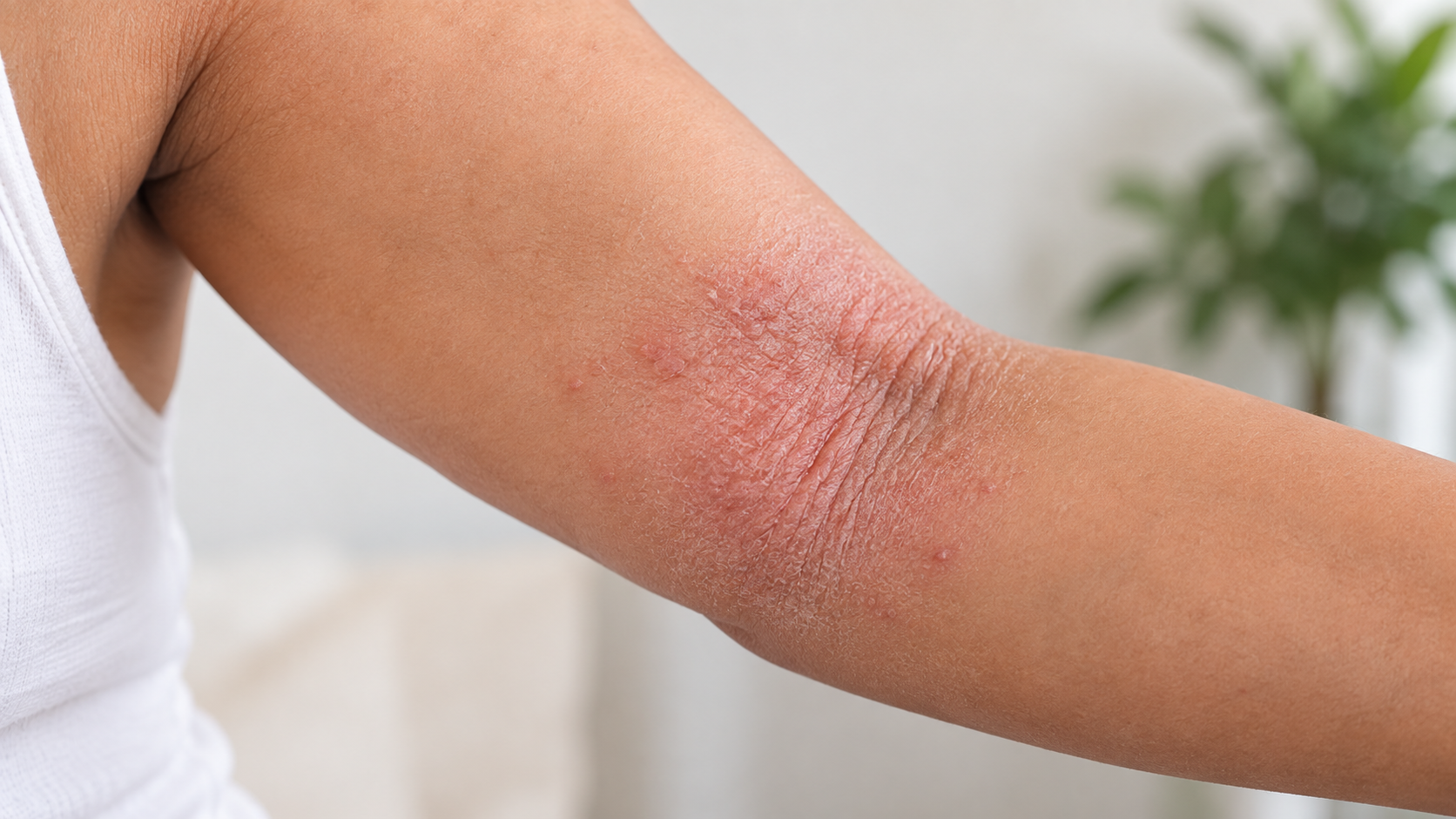
You May Be Looking for a Different Kind
of Eczema Care If…
- You want to understand what may be influencing your eczema, not only respond to each flare.
- You want to talk about nutrition, gut health, sleep, stress, and the connection between itch and your nervous system.
- You value medical expertise and want a plan that also makes room for lifestyle and complementary approaches.
- You would like more time with a dermatologist to understand your condition and explore your options.
- You want a personalized plan built around your health, your goals, and what feels manageable in your life.
Eczema Is a
Chronic Inflammatory Skin Disease
Atopic dermatitis, commonly called eczema, is a chronic inflammatory condition involving both the skin barrier and the immune system. Genetics, environmental exposures, allergens, infections, stress, sleep, and other individual factors can influence how the disease behaves.
What Is Eczema?
The hallmarks of eczema are intense itch, dry and sensitive skin, and recurring inflammation.
In atopic dermatitis, the skin's protective barrier does not function as effectively as it should. Moisture escapes more easily, while irritants and allergens can penetrate the skin more readily.
At the same time, the immune system becomes overly activated in the skin, contributing to redness, itching, sensitivity, and recurrent flares.
Because eczema involves both barrier dysfunction and immune activity, effective care often combines consistent skincare, appropriate anti-inflammatory treatment, trigger management, and attention to factors such as sleep, stress, and overall health.
What Can Influence Atopic Dermatitis?
Atopic dermatitis is not caused by one single factor. It develops through a combination of genetics, skin-barrier dysfunction, immune activity, and environmental influences — and the balance can look different from one person to another.
- Skin barrier dysfunction. Atopic dermatitis is associated with differences in the proteins and lipids that help maintain a healthy skin barrier. In some patients, inherited differences affecting these skin-barrier components contribute to this vulnerability. This is why consistent moisturizing and gentle skincare are foundational parts of eczema treatment.
- Immune dysregulation. Atopic dermatitis involves an overactive inflammatory immune response in the skin, contributing to redness, itch, sensitivity, and recurrent inflammation.
- Skin microbiome changes. People with atopic dermatitis often have changes in the skin microbiome, including increased colonization with Staphylococcus aureus, particularly during active disease. These changes may interact with the skin barrier and immune system and contribute to inflammation.
- Stress and sleep. Stress and sleep disruption can worsen itching and contribute to eczema flares. Over time, the itch-scratch cycle itself can become self-reinforcing.
- Environmental triggers and irritants. Fragrance, harsh cleansers, sweating, heat, low humidity, certain fabrics, occupational exposures, and contact allergens can worsen eczema in susceptible individuals.
- Allergic conditions. People with atopic dermatitis are more likely to also have asthma, allergic rhinitis, and true food allergy. These conditions may be relevant to the overall picture, although eczema itself is not always caused by allergy.
- Nutrition and overall health. We pay thoughtful attention to your diet and offer practical guidance that emphasizes a varied, whole-food, plant-forward eating pattern. Some observational studies have linked certain highly processed dietary patterns with eczema. We also consider suspected food reactions, confirmed allergies, nutritional needs, and digestive symptoms in the context of your individual health.
Research has identified differences in the gut microbiome in some people with eczema. Researchers are also exploring whether aspects of gut barrier function differ. We consider gut health in the broader context of your digestive symptoms and overall health.
No two patients have exactly the same pattern. Understanding your skin history, triggers, associated conditions, previous treatment response, and overall health helps us build a more individualized plan.
The Integrative Approach at Skin Harmony MD
Our integrative approach combines medical dermatology with time to understand the whole person. We consider skincare, nutrition, gut health, sleep, stress regulation, the itch-scratch cycle, and complementary approaches that may be relevant to your care. Your plan is shaped by your symptoms, preferences, and goals, with medical treatment available when it is needed.
What Comprehensive
Eczema Care Looks Like
A Thorough Evaluation of Your Full Picture
Nutrition & Gut Health
We do not recommend broad elimination diets for everyone. If a focused elimination trial makes sense, we plan it with a registered dietitian, keep it time-limited, and include a thoughtful reintroduction phase. Our goal is to preserve or restore dietary diversity and identify what you can comfortably eat. A confirmed food allergy may require a different approach.
Gut health is part of this broader conversation about your symptoms and overall health.
Mind-Body Care for Stress & Itch
Skincare & Barrier Support
Thoughtful Evaluation & Testing
Medical Dermatology & Your Treatment Choices
If you are not comfortable pursuing a medication, we can talk through alternative and complementary options that are reasonable and safe for your situation. We will be honest about what each approach may offer, monitor how your skin is doing, and revisit treatment choices together if your eczema is not adequately controlled.
Collaborative Complementary Care
Eczema Often Travels
With Other Atopic Conditions
Asthma & Seasonal Allergies
Food Allergy
Sleep, Mood & Quality of Life
Eczema,
Answered Honestly
Yes. Moisturizing is one of the foundations of eczema treatment because it helps restore hydration and support the impaired skin barrier. Consistent use of thick creams or ointments can reduce dryness, improve symptoms, and help decrease flares. For many patients, applying moisturizer shortly after bathing is particularly helpful.
Yes. Depending on your eczema, options may include non-steroidal prescription treatments, phototherapy, and a plan that strengthens your skincare routine and addresses relevant triggers, nutrition, sleep, and stress. Phototherapy would be arranged through a local treatment center. We'll talk through the benefits and limitations of each option so you can choose a plan you feel comfortable pursuing.
Usually, no. Broad elimination diets have not been shown to substantially improve eczema for most people and can lead to nutritional deficiencies. If your history suggests a specific food allergy or food-related reaction, we can determine whether allergy evaluation or a focused dietary trial is appropriate. If we pursue an elimination trial, we work with a registered dietitian and plan for reintroduction rather than leaving you on an open-ended restrictive diet.
Not necessarily. Most people with eczema do not need broad allergy testing.
Testing may be helpful when your history suggests a true immediate food allergy, allergic contact dermatitis, or another specific allergic condition. People with eczema can sometimes have positive allergy tests to foods they tolerate normally, so indiscriminate testing can lead to false positives and unnecessary food avoidance.
Triggers vary considerably from person to person. Common triggers include dry weather, heat, sweating, fragrance, harsh cleansers, irritating fabrics, skin infections, stress, sleep disruption, and contact allergens or irritants.
Part of your evaluation is identifying which factors are actually relevant to your eczema so you can focus on meaningful changes rather than trying to avoid everything.
Scratching can provide momentary relief, but it damages the skin and increases inflammation, which leads to more itching.
We use a combination of appropriate medical treatment, skincare, itch-relief strategies, behavioral tools, sleep support, and stress-management techniques to help interrupt the cycle.
Yes, we consider supplements in the context of your health history, diet, and individual needs. In some cases, we may recommend a probiotic. If we identify a nutritional deficiency, we may also recommend targeted supplementation, such as vitamin D when appropriate. We'll discuss why a supplement may be useful for you, along with its potential benefits, risks, and limitations.
Yes. We are open to incorporating complementary approaches, including Traditional Chinese Medicine or Ayurveda, alongside your medical treatment plan. We can discuss how these approaches fit with your goals and bring the different parts of your care together.
Atopic dermatitis is a chronic condition, but its course can change substantially over time. Some people experience long periods with little or no active disease, while others need ongoing treatment to maintain control.
Our goal is to reduce flares, control itch and inflammation, support the skin barrier, and help you develop a sustainable long-term strategy.
Yes. Skin Harmony MD is a dermatology practice. When appropriate, treatment may include topical corticosteroids, non-steroidal topical medications, phototherapy, biologic therapies, or oral systemic medications.
Our integrative approach means we consider these treatments alongside skincare, triggers, sleep, stress, nutrition, gut health when relevant, and overall health.
No. Some patients choose Skin Harmony MD as their primary dermatology practice, while others use our integrative consultations to complement care they already receive.
When appropriate, we are happy to collaborate with your existing dermatologist, allergist, primary care clinician, or other members of your healthcare team.
Yes. Skin Harmony MD is a virtual integrative dermatology practice serving adults throughout Maryland, Virginia, and Washington, DC. Visits are conducted via telehealth and are cash-pay, allowing us the time and depth this type of care requires.

Comprehensive Eczema Care, Built Around You
Virtual eczema care for adults throughout Maryland, Washington, DC, and Virginia — combining evidence-based dermatology with the time and attention to understand your skin, triggers, and broader health.
Book a Discovery Call