Acne Care That
Goes Beyond the Surface
Acne is a common inflammatory skin condition influenced by genetics, hormones, oil production, skin-care habits, medications, and sometimes metabolic or lifestyle factors. At Skin Harmony MD, we combine evidence-based medical dermatology with a thoughtful evaluation of what may be contributing to your individual acne pattern.
Book a Discovery Call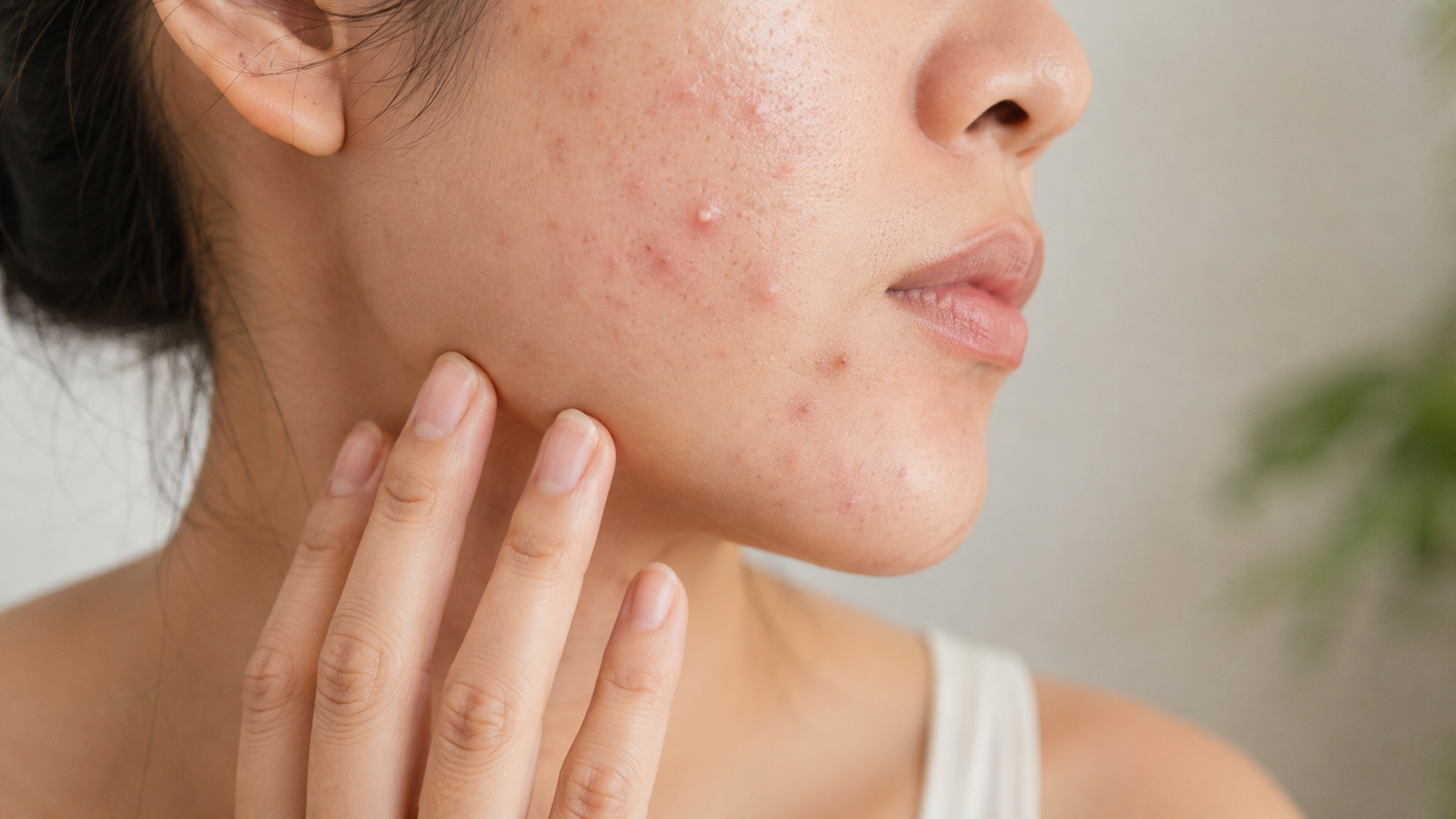
You May Be Looking for a Different Kind
of Acne Care If…
- You want to better understand what may be contributing to your acne rather than simply reacting to each breakout.
- You're curious about how hormones, nutrition, metabolic health, stress, sleep, or digestive health may fit into the broader picture.
- You want evidence-based medical treatment alongside a whole-person approach to your skin and overall health.
- You want a dermatologist who leaves space for evidence-informed complementary approaches alongside medical treatment when appropriate.
- You'd like more time with a dermatologist to understand your acne pattern and treatment options.
- You want a personalized plan rather than a one-size-fits-all approach.
Acne Is Influenced by
More Than One Factor
Acne develops when hair follicles become clogged with oil and dead skin cells, leading to blackheads, whiteheads, inflamed pimples, and sometimes deeper nodules or cysts.
Several factors can influence why acne develops and how persistent or severe it becomes, including genetics, hormones, oil production, inflammation, medications, skin-care products, and in some patients, metabolic or lifestyle factors.
What Is Acne?
Acne can look very different from person to person. Some people mainly develop blackheads and whiteheads, while others experience inflammatory pimples, deeper painful lesions, or cysts that can increase the risk of scarring.
Your acne pattern, age, medical history, menstrual history when relevant, skincare routine, and response to previous treatments all help guide your treatment plan.
What Can Influence Acne?
Several factors can affect how often you break out and how severe your acne becomes.
- Hormones. Androgens and hormonal fluctuations can increase oil production and contribute to acne. Breakouts may worsen around the menstrual cycle and can also occur alongside conditions such as polycystic ovary syndrome (PCOS).
- Genetics. Acne commonly runs in families and can influence both the likelihood and severity of disease.
- Skin and hair products. Certain cosmetics, skincare products, and hair products can clog pores or aggravate acne.
- Medications and supplements. Some prescription medications, hormones, and supplements can contribute to acne or acne-like eruptions.
- Metabolic health. Insulin resistance and PCOS may be relevant in some patients, especially when acne occurs alongside irregular periods or other metabolic or hormonal symptoms.
- Diet. Higher-glycemic dietary patterns may worsen acne in some people. Some studies have also found associations between certain dairy products, particularly skim milk, and acne, although individual responses vary.
- Stress. Stress may worsen acne in some people through effects on inflammation, sleep, hormones, and behaviors such as skin picking.
- Sleep and lifestyle. Sleep quality, movement, and daily habits support overall metabolic and inflammatory health and may be relevant to acne in some people.
- Gut and digestive health. Research has identified differences in the gut microbiome in some people with acne, and the relationship between the gut, immune system, inflammation, and skin continues to be studied. Gut health can be relevant in acne, particularly when inflammatory acne occurs alongside digestive symptoms or concerns. In those situations, we may consider a more detailed evaluation of digestive health and, when appropriate, collaborate with a dietitian or nutrition professional as part of a broader treatment plan.
No two patients have exactly the same acne pattern. Understanding your history, symptoms, treatment response, and the factors most relevant to you helps us build a more individualized plan.
The Integrative Approach at Skin Harmony MD
Evidence-based dermatologic treatment remains the foundation of acne care. Our integrative approach also considers hormonal patterns, metabolic health, nutrition, stress, sleep, skincare, digestive concerns when relevant, and other factors that may influence your skin.
What Comprehensive
Acne Care Looks Like
A Thorough Evaluation of Your Full Picture
This allows us to better understand your individual acne pattern and personalize treatment.
Targeted Evaluation & Testing
Testing may be appropriate when your history suggests a hormonal or metabolic condition, such as irregular periods, unwanted facial or body hair, scalp hair thinning, PCOS, or insulin resistance.
Additional testing is considered selectively when the results are likely to meaningfully change your care.
Medical Dermatology as the Foundation
We use medications thoughtfully while also considering the hormonal, metabolic, nutritional, lifestyle, and other factors that may be relevant to your acne and overall health.
Hormonal & Metabolic Health
Treatment may include medical therapy, nutrition and lifestyle strategies, and coordination with primary care, gynecology, or endocrinology when appropriate.
Nutrition & Digestive Health
We focus on a balanced, minimally processed, fiber-rich dietary pattern rather than unnecessary restriction.
Gut health can be relevant in acne, particularly when inflammatory acne occurs alongside digestive symptoms or concerns. In those situations, we may consider a more detailed evaluation of digestive health and, when appropriate, collaborate with a dietitian or nutrition professional as part of a broader treatment plan.
Stress, Sleep & Lifestyle Foundations
Evidence-Informed Complementary Approaches
When appropriate, we can incorporate selected evidence-informed complementary strategies and discuss the potential benefits, limitations, and risks of these options as part of your overall treatment plan.
Acne Can Be Connected
to More Than the Skin
Hormonal Health
Metabolic Health
Emotional Health & Quality of Life
Acne,
Answered Honestly
Diet can influence acne in some people, but it is rarely the only factor.
Higher-glycemic dietary patterns may worsen acne in some patients, and some studies have found an association between dairy — particularly skim milk — and acne.
We consider nutrition as one part of a broader picture that may also include hormones, genetics, skincare, medications, metabolic health, and stress.
Research has identified differences in the gut microbiome in some people with acne, and the relationship between the gut, immune system, inflammation, and skin continues to be studied.
Gut health can be relevant in acne, particularly when inflammatory acne occurs alongside digestive symptoms or concerns. In those situations, we may consider a more detailed evaluation of digestive health and, when appropriate, collaborate with a dietitian or nutrition professional as part of a broader treatment plan.
Hormonal factors can play an important role in acne, but some patterns suggest they may be especially relevant.
This may include acne that flares predictably around the menstrual cycle or occurs alongside irregular periods, unwanted facial or body hair, scalp hair thinning, fertility concerns, or other signs of PCOS.
Hormone testing is not necessary for everyone.
Most acne can be diagnosed and treated based on your history and skin examination. Hormone testing may be useful when acne occurs alongside irregular periods, unwanted facial or body hair, scalp hair thinning, fertility concerns, or other signs of a hormonal condition such as PCOS.
Stress can worsen acne in some people.
It may influence inflammation, sleep, hormonal signaling, and behaviors such as picking or touching the skin. Many patients notice that their acne becomes more active during periods of significant stress.
We generally recommend a balanced, minimally processed, fiber-rich dietary pattern. High-glycemic dietary patterns may worsen acne in some people and are worth addressing when relevant.
Some studies have found associations between acne and certain dairy products, particularly skim milk, but this does not mean everyone with acne needs to eliminate dairy. We individualize dietary recommendations based on your history, preferences, and overall health.
Certain supplements may be useful in selected patients, particularly when there is a nutritional deficiency or another clear clinical indication.
Recommendations are individualized based on your diet, medical history, medications, laboratory findings when relevant, and the potential benefits and risks of a particular supplement.
Not everyone with acne needs isotretinoin.
Skin Harmony MD does not currently manage isotretinoin treatment. If your acne is severe, scarring, or likely to benefit from isotretinoin, we will discuss that option honestly and refer you to an appropriate dermatology practice when needed.
Yes. We may incorporate selected evidence-informed complementary approaches when they fit your individual needs and goals.
We can discuss the potential benefits, limitations, and risks of supplements, natural remedies, and other complementary options as part of your overall treatment plan.
Yes. Skin Harmony MD is a dermatology practice.
Depending on your acne pattern and severity, treatment may include topical retinoids, benzoyl peroxide, topical or oral antibiotics when appropriate, hormonal treatments, and other prescription therapies.
Our integrative approach means we consider these treatments alongside hormonal and metabolic health, nutrition, stress, sleep, skincare, gut and digestive health when relevant, and your overall health.
No. Some patients choose Skin Harmony MD as their primary dermatology practice, while others use our integrative consultations to complement care they already receive.
Yes. Skin Harmony MD is a virtual integrative dermatology practice serving adults throughout Maryland, Virginia, and Washington, DC.
Visits are conducted via telehealth and are cash-pay, allowing us the time and depth this type of care requires.

Comprehensive Acne Care, Built Around You
Virtual acne care for adults throughout Maryland, Washington, DC, and Virginia — combining evidence-based dermatology with the time and attention to understand your acne pattern and the broader factors that may be relevant to your health.
Book a Discovery Call